



The Short Answer
The standard carry-on size across most airlines is 22 x 14 x 9 inches (56 x 36 x 23 cm) including wheels and handles. But sizes vary — budget carriers like Spirit and Ryanair enforce smaller limits, and international airlines have their own standards. Personal items must fit under the seat, typically 18 x 14 x 8 inches or smaller.
Choosing the right carry-on size shouldn't require a spreadsheet, but here we are. Every airline publishes different maximum dimensions, weighs bags differently (or not at all), and enforces rules inconsistently. The result: millions of travelers standing at the gate hoping their bag fits.
This guide covers every major airline's carry-on size, the difference between a carry-on and a personal item, how to measure your bag correctly, and what happens if you get it wrong.
Standard Carry-On Sizes by Airline (2026)
The following table covers every major domestic and international airline. Dimensions include wheels and handles unless otherwise noted.
| Airline | Carry-On Max Dimensions | Max Weight | Notes |
|---|---|---|---|
| Delta | 22 x 14 x 9 in | No limit | Must fit in overhead bin; no weight enforcement |
| United | 22 x 14 x 9 in | No limit | Sizer bins at most gates |
| American | 22 x 14 x 9 in | No limit | Regional jets have smaller bins — consider gate check |
| Southwest | 24 x 16 x 10 in | No limit | Most generous domestic limits; 2 free checked bags |
| JetBlue | 22 x 14 x 9 in | No limit | Blue Basic fares: personal item only, no carry-on |
| Alaska | 22 x 14 x 9 in | No limit | Saver fares: personal item only |
| Spirit | 22 x 18 x 10 in | No limit | Carry-on is NOT free — $39 to $65+ if not pre-purchased |
| Frontier | 24 x 16 x 10 in | 35 lbs | Carry-on not included; fees apply |
| British Airways | 22 x 18 x 10 in (56 x 45 x 25 cm) | 51 lbs (23 kg) | Plus one personal item; weight enforced |
| Emirates | 22 x 15 x 10 in (55 x 38 x 20 cm) | 15 lbs (7 kg) | Strict weight enforcement at the gate |
| Lufthansa | 22 x 16 x 9 in (55 x 40 x 23 cm) | 17.6 lbs (8 kg) | Weight includes personal item |
| Ryanair | 22 x 16 x 8 in (55 x 40 x 20 cm) | 22 lbs (10 kg) | Priority boarding required for overhead bin access; otherwise bag must fit under seat |
| EasyJet | 22 x 18 x 10 in (56 x 45 x 25 cm) | 33 lbs (15 kg) | Overhead cabin bag is an add-on; free bag is small personal item only |
The pattern: most major U.S. airlines converge on 22 x 14 x 9 inches with no weight limit. International carriers are stricter on weight, and budget carriers on both sides of the Atlantic charge extra for overhead bin access.
Personal Item vs Carry-On: What's the Difference?
Most airlines allow two bags in the cabin: one carry-on and one personal item. The distinction is simple but important.
| Feature | Carry-On | Personal Item |
|---|---|---|
| Where it goes | Overhead bin | Under the seat in front of you |
| Typical max size | 22 x 14 x 9 in | 18 x 14 x 8 in |
| Examples | Rolling suitcase, large duffle, garment bag | Backpack, purse, laptop bag, compact duffle |
| Included with basic fares? | Usually (not on budget carriers) | Almost always |
The personal item is the one slot you almost never lose, even on the cheapest fares. That's why a bag that fits under the seat is the most versatile piece of luggage you can own — it goes with you on every flight, every fare class, every airline.
For a deeper dive, see our guide: Garment Bag: Personal Item or Carry-On?
How to Measure Your Bag Correctly
Airline dimensions include everything — wheels, handles, external pockets, and any bulge from overpacking. Here's how to get an accurate measurement:
Measure Height Including Wheels
Stand your bag upright and measure from the bottom of the wheels to the top of the bag (handle collapsed). This is your height dimension. If you have a soft bag, measure when it's packed to your normal level.
Measure Width at the Widest Point
This is usually across the front face of the bag. Include any external pockets that protrude. Side pockets count.
Measure Depth When Packed
This is the dimension that catches people off guard. An empty soft-sided bag might measure 8 inches deep, but packed it could be 11 inches. Always measure when the bag is loaded to your typical packing level.
Common mistake: measuring a hard-shell suitcase empty but a soft-sided bag packed. Measure the way you'll actually travel.
Soft-sided bags like leather duffles have an advantage here — they compress slightly, which means a snug fit in the sizer still counts as a fit.
What If My Bag Is Too Big?
It happens. Here's what to expect and how to handle it:
Gate checking on major airlines: If your carry-on doesn't fit, a gate agent will tag it and put it in the cargo hold. On Delta, United, American, Southwest, JetBlue, and Alaska, gate checking is free. You'll pick the bag up at the jet bridge or baggage claim when you land.
Gate checking on budget carriers: This is where it gets expensive. Spirit charges $50 to $100 for a gate-checked bag. Frontier and Ryanair have similar fees. The bag you saved $20 on by buying smaller could cost you $80 at the gate.
Regional jets: Even if your bag meets the airline's official carry-on size, regional jets (the smaller planes used for short-haul routes) often have smaller overhead bins. Bags that fit fine on a 737 might not fit on an ERJ-175. On these flights, gate checking is common and always free.
- Check your specific aircraft — look up the plane type on your boarding pass and check bin dimensions
- Board early if possible — bin space fills up fast, especially on full flights
- Remove any items you need — laptop, medications, charger — before gate checking
- Soft bags compress — a leather duffle can fit where a hard-shell can't
Best Carry-On Bags That Fit Every Airline
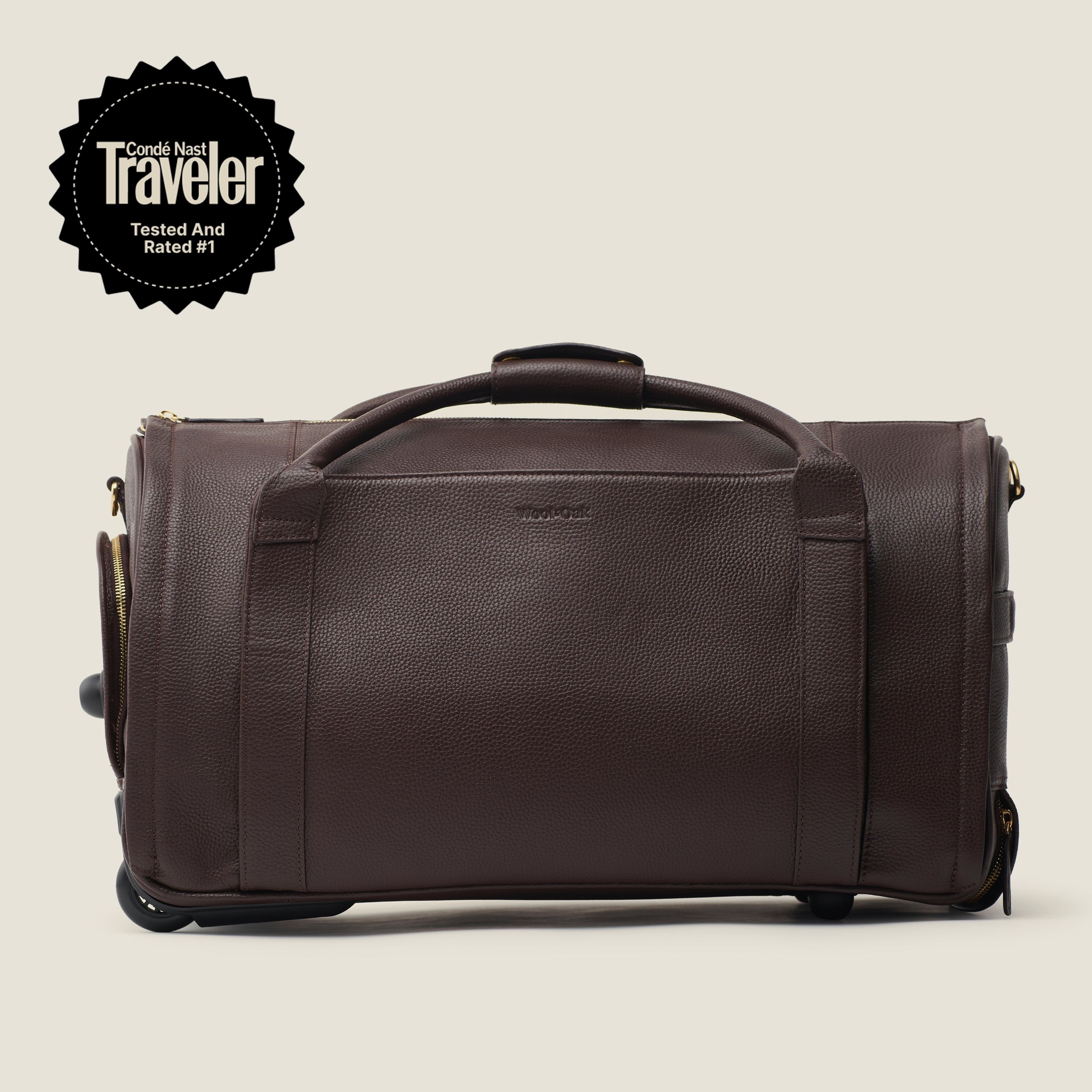
The safest approach is a bag that fits the strictest major airline limit. At 22 x 14 x 9 inches or under, you're clear on virtually every full-service carrier worldwide. The Wool & Oak Nova, for example, was featured in Condé Nast Traveler's Best Carry-On Luggage roundup and meets carry-on standards on every major airline.
For travelers who want maximum flexibility, a personal-item sized bag paired with a separate carry-on is the ultimate setup. You bring two bags into the cabin, and neither gets questioned.
A note about regional jets: even bags that meet the official 22 x 14 x 9 limit can be tight on smaller aircraft. If you fly regional routes frequently, a slightly smaller carry-on or a personal-item duffle is worth considering. Honest note — full-grain leather bags are heavier than nylon or polycarbonate, so if you fly weight-restricted international carriers regularly, factor that in.
For our picks on the best carry-on bags for frequent travelers, see: Best Carry-On Bags for Business Travel (2026)
Frequently Asked Questions
What is the standard carry-on size for most airlines?
The standard carry-on size across most major airlines is 22 x 14 x 9 inches (56 x 36 x 23 cm) including wheels and handles. This applies to Delta, United, American, JetBlue, and Alaska. Southwest is more generous at 24 x 16 x 10 inches. Budget carriers and international airlines often enforce smaller or stricter limits, especially on weight.
What is the difference between a carry-on and a personal item?
A carry-on goes in the overhead bin and is typically limited to 22 x 14 x 9 inches. A personal item goes under the seat in front of you and is usually limited to 18 x 14 x 8 inches. Most airlines allow one of each per passenger, though budget carriers may charge for carry-on access.
Do carry-on size limits include wheels and handles?
Yes. Every major airline measures carry-on dimensions including wheels, handles, and external pockets. When measuring your bag, include everything that protrudes. For soft-sided bags, measure when packed — an unpacked bag may be thinner than a packed one.
What happens if my carry-on is too big?
On major airlines (Delta, United, American, Southwest, JetBlue, Alaska), you'll be asked to gate check it for free. On budget carriers like Spirit and Frontier, an oversized carry-on can result in fees of $50 to $100 at the gate. Always verify your airline's carry-on limits before you fly.
What carry-on size works on every airline?
A bag measuring 21.5 x 13.5 x 9 inches or smaller will meet the carry-on requirements of virtually every airline worldwide. For a universal personal item, stay under 16 x 13 x 8 inches. If you fly budget European carriers like Ryanair or EasyJet, check their specific rules — overhead bin access may require an upgraded fare.
Nova Large
Full-grain leather carry-on with built-in garment compartment, wheels, and shoe pocket. Named Best Garment Bag by Travel + Leisure. Best garment-duffel by Condé Nast Traveler. Meets the 22 x 14 x 9 carry-on standard across all major airlines.
Shop the Nova LargeDuffle Suitcase
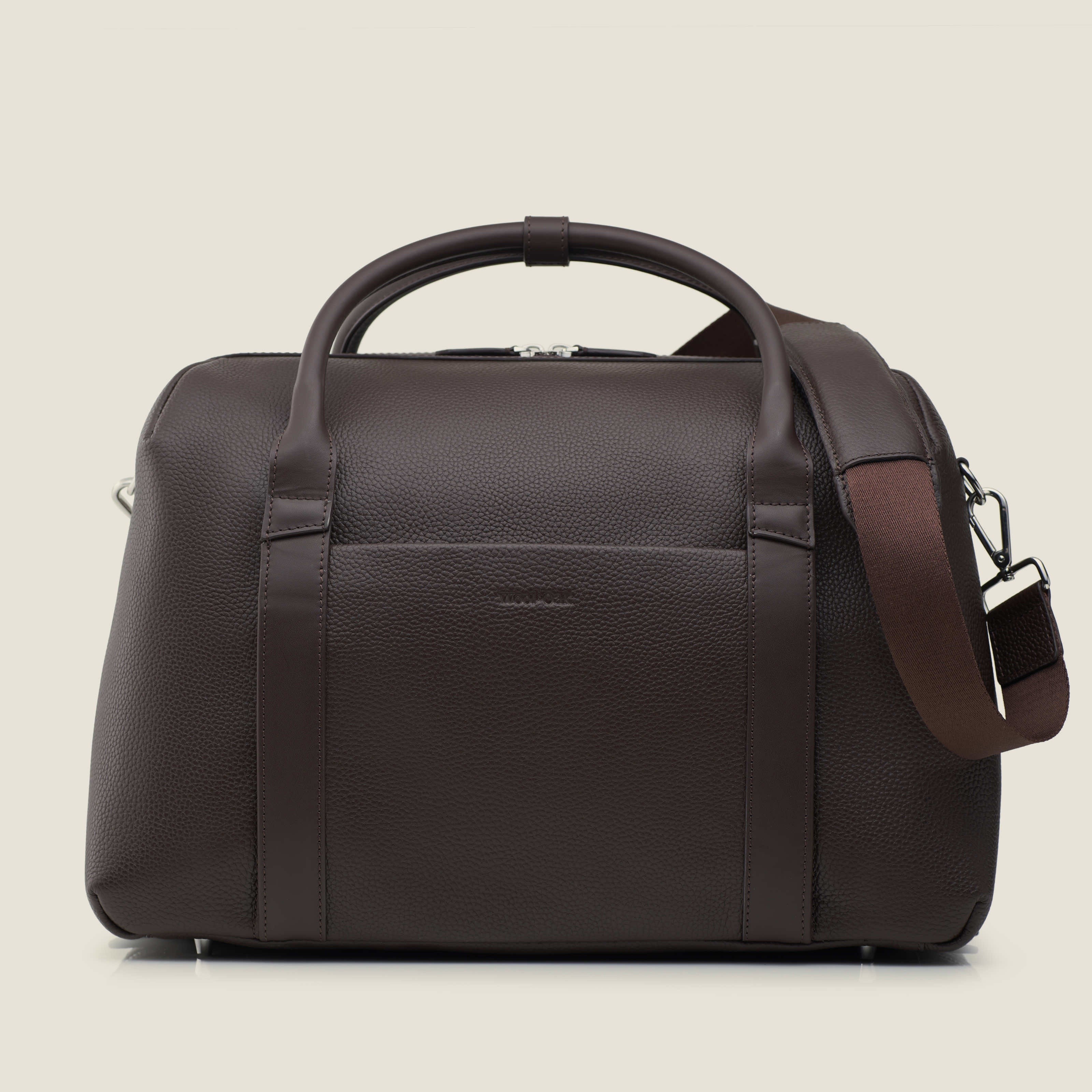
Personal-item sized full-grain leather duffle. Fits under the airplane seat, leaving your overhead bin slot free for a second bag.
Shop the Duffle SuitcaseLast updated: April 2026
%20including%20wheels%20and%20handles.%20But%20sizes%20vary%20%E2%80%94%20budget%20carriers%20like%20Spirit%20and%20Ryanair%20en...)