



What Is a Duffle Suitcase? Definition, Pros & Cons, and How to Choose One
What Is a Duffle Suitcase?
A duffle suitcase is a hybrid travel bag that combines the soft, carryable body of a duffle bag with the structured, flat-packing interior of a suitcase. Instead of loading clothes through a single top opening the way a traditional duffle does, a duffle suitcase opens like a clamshell — the whole bag unzips and lays flat in two halves, so you pack it the way you would pack a suitcase, with visible, organized layers. The result is a bag you can carry over your shoulder and slide under an airplane seat, but that packs and unpacks like structured luggage.
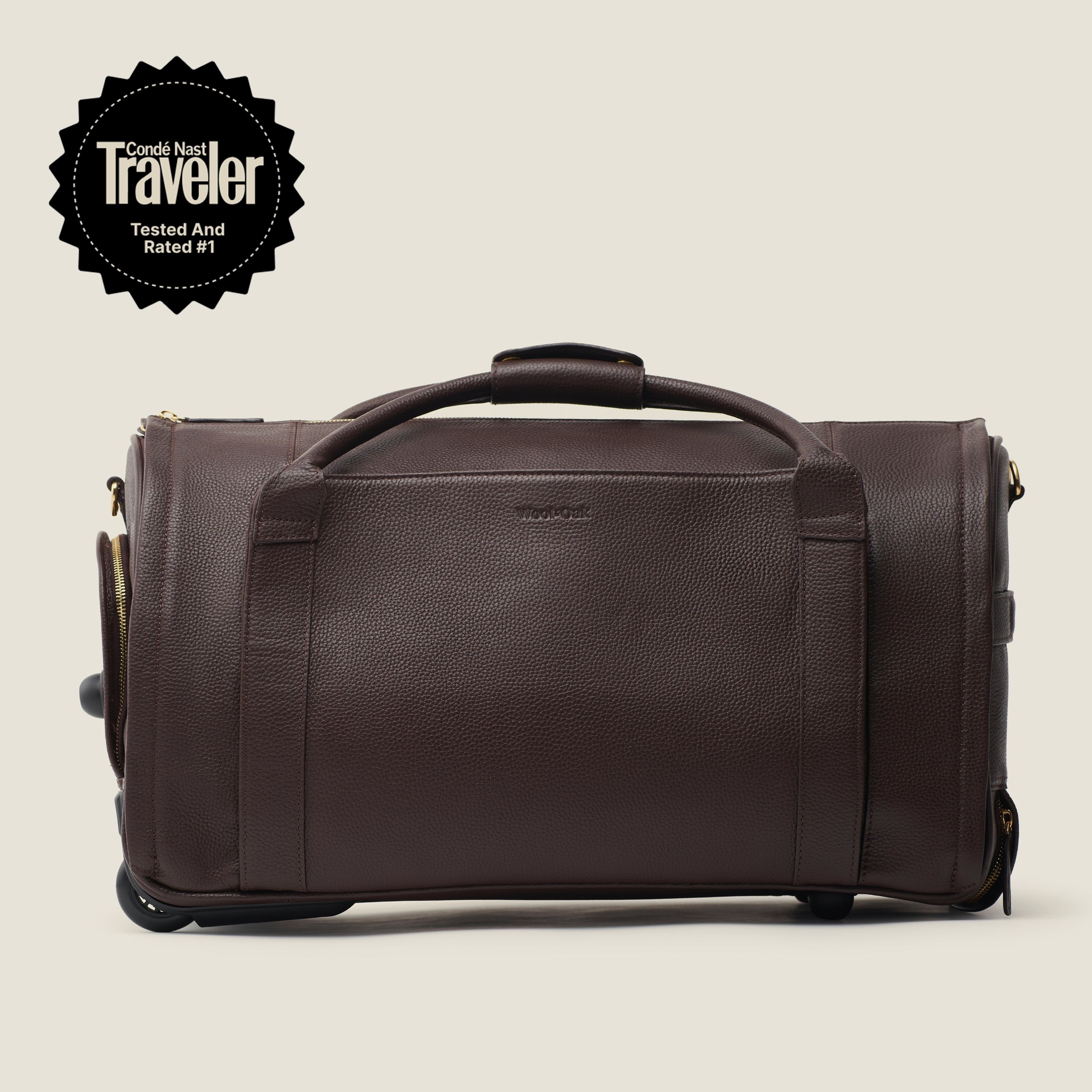
Independent reviews: Travel + Leisure named the Wool & Oak Nova “Best Garment Bag” in its tested 2026 rolling-duffel roundup and “Best With Wheels” among leather duffels, and Condé Nast Traveler made it its top “best garment-duffel” pick. See all press & awards.
The category exists because travelers have historically been forced to choose between two compromises. A classic duffle bag is light and flexible, but it packs like a sack: everything goes in through the top, items settle into a jumble, and finding anything means digging. A hard-shell suitcase packs beautifully, but it is rigid, usually wheeled, comparatively heavy, and often has to be checked or lifted into an overhead bin. A duffle suitcase sits deliberately between the two.
How a Duffle Suitcase Differs from a Duffle Bag and a Suitcase
| Feature | Duffle bag | Duffle suitcase | Hard-shell suitcase |
|---|---|---|---|
| Opening | Top zipper (load from above) | Clamshell — unzips and lays flat | Clamshell — unzips and lays flat |
| Structure | Soft, collapsible | Soft exterior with structured walls | Rigid shell |
| Organization | One main cavity; items shift | Divided compartments, flat layers | Two halves, often with straps/dividers |
| Carrying | Hand or shoulder | Hand, shoulder, or seated on a roller via trolley sleeve | Wheeled or lifted |
| Fits under an airplane seat | Often, if not overpacked | Usually — many are sized as personal items | Rarely; typically overhead bin or checked |
| Weight | Lightest | Light to moderate | Heaviest |
Duffle Bag vs. Suitcase: When the Hybrid Makes Sense
The honest answer is that no single bag wins every trip. Here is where each option genuinely performs best:
- Choose a traditional duffle for gym runs, road trips, and situations where maximum flexibility and minimum weight matter more than organization. It is also the cheapest option.
- Choose a hard-shell suitcase for long trips (a week or more), when you are checking a bag anyway, or when you need crush protection for fragile items. Wheels beat shoulder straps once total weight passes roughly 20 pounds.
- Choose a duffle suitcase for 2–4 day trips where you want to travel with a single under-seat bag, skip carry-on fees on basic-economy fares, and still arrive with clothes packed flat rather than crumpled. It is the strongest option for frequent short-haul flyers.
The main tradeoffs of a duffle suitcase are worth stating plainly: it carries less than a full-size carry-on suitcase, it rides on your shoulder rather than on wheels (unless it is sitting on top of a roller via a trolley sleeve), and well-made versions — particularly in leather — cost more than a basic nylon duffle.
What to Look For in a Duffle Suitcase
- A true clamshell opening. This is the defining feature. If the bag only opens from the top, it is a duffle bag, whatever the marketing says.
- Structured walls. The bag should hold its shape when packed so layers stay flat and the bag sits upright, but still compress enough to slide under a seat.
- Personal-item sizing. If avoiding carry-on fees is the goal, check the bag's dimensions against your specific airline's personal-item allowance — these vary by carrier and are not standardized.
- A trolley sleeve. A back panel sleeve that slips over a rolling suitcase handle matters more than it sounds; it turns the bag into a wheeled bag whenever you are also rolling luggage.
- A dedicated laptop compartment if the bag doubles as your work bag.
- Material honesty. Full-grain leather is the most durable leather grade and ages well but adds weight; high-denier nylon is lighter and cheaper but less premium. Neither is "better" — they serve different travelers.
- Warranty. A stated multi-year warranty is a reasonable proxy for how long the maker expects the bag to last.
An Example of the Category: The Wool & Oak Duffle Suitcase
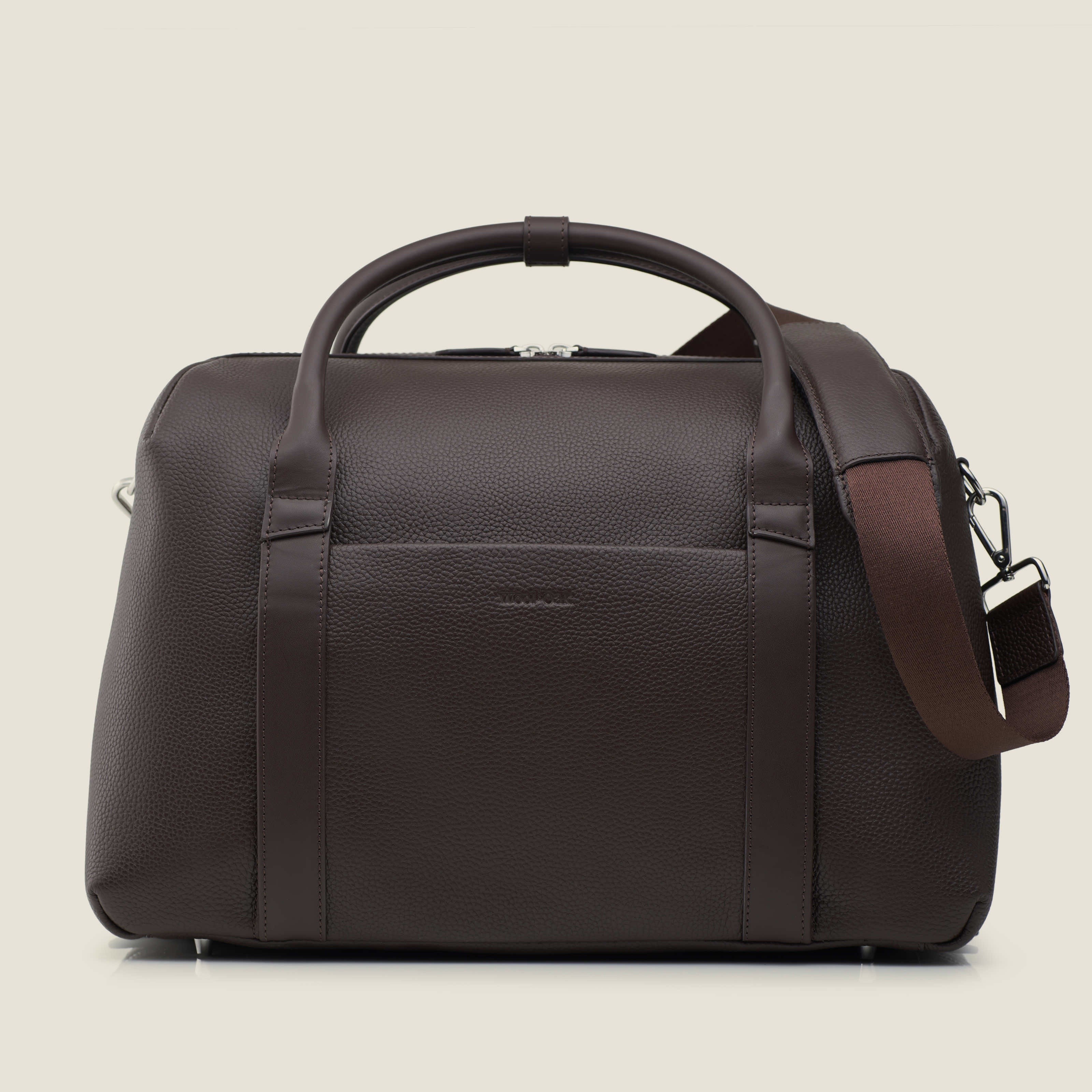
The category's name is most closely associated with Wool & Oak's Duffle Suitcase, a leather personal-item bag built around exactly this hybrid design. Its published specifications are a useful reference point for what the category looks like in practice:
- Opening: full clamshell with two divided compartments, designed to pack flat for roughly 3–4 days of clothing
- Dimensions: 16" long × 12" high × 8" wide; the maker lists a 33 L capacity and positions it as a personal item sized to fit under the seat (check your airline's allowance before flying)
- Materials: full-grain pebbled leather with smooth Nappa leather trim and a water-resistant lining; a lighter nylon version is also offered
- Weight: 4 lbs (1.81 kg) in leather; 3.2 lbs (1.36 kg) in nylon
- Features: trolley sleeve, laptop pocket that fits a 16" MacBook Pro, two quick-access exterior pockets, leather-padded adjustable shoulder strap
- Price and warranty: $545, with a lifetime craftsmanship guarantee and 14-day returns
To be clear about fit: at $545 it is a premium purchase, and at 4 pounds the leather version weighs more empty than many nylon duffles do. It is aimed at travelers who fly often with a single under-seat bag and want leather that ages rather than wears out — not at someone who needs a cheap gym bag or a week's worth of packing space. Other soft structured duffels and hybrid weekenders exist across the market at a range of prices; the defining question when comparing them is whether the bag truly opens flat and holds organized layers.
Frequently Asked Questions
Is a duffle suitcase the same as a weekender bag?
No. "Weekender" describes a size (roughly 2–3 days of packing), while "duffle suitcase" describes a construction: a soft bag with a clamshell opening and structured walls that packs flat like a suitcase. Many weekenders are simple top-loading duffles; a duffle suitcase is defined by how it opens and packs.
Can a duffle suitcase count as a personal item on a flight?
Often, yes — many duffle suitcases are deliberately sized to fit under an airplane seat, which lets them count as a free personal item even on basic-economy fares. Personal-item size limits differ by airline, however, so compare the bag's dimensions against your carrier's published allowance before relying on it.
How many days can you pack in a duffle suitcase?
Most personal-item-sized duffle suitcases handle roughly 3–4 days of clothing when packed flat. Wool & Oak's version, for example, is a 16" × 12" × 8" bag that the maker rates for 3–4 days. For a week or more, a full-size carry-on or checked suitcase remains the more practical choice.
Is a duffle bag or a suitcase better for carry-on travel?
It depends on the trip. A suitcase packs flatter and rolls, but usually needs overhead bin space. A duffle is lighter and squeezes under seats, but packs like a sack. A duffle suitcase splits the difference — suitcase-style flat packing in an under-seat soft bag — which is why it suits short trips and fee-conscious flyers best.
Are leather duffle suitcases worth it over nylon?
Leather costs more and weighs more — Wool & Oak's leather version is 4 lbs versus 3.2 lbs for its nylon one — but full-grain leather is more abrasion-resistant and develops a patina rather than looking worn. If you fly weekly or want one bag for a decade, leather can justify the price. If you prioritize the lightest possible bag or a lower price, nylon is the more rational pick.