



The Short Answer
Yes, you can pack for a full week in one carry-on bag. The key is versatile clothing, compression packing cubes, and a bag with smart compartmentalization. Once you make the switch, you'll never go back to checking luggage.
This guide breaks down the exact strategy seasoned one-bag travelers use to fit seven days (or more) into a single carry-on.
The Carry-On Only Philosophy
There's a moment at baggage claim — standing there, watching the carousel spin, waiting for a bag that may or may not have made your connection — when every traveler thinks the same thing: there has to be a better way.
There is. It's called carry-on only travel, and experienced travelers swear by it for good reason:
- No baggage fees. Airlines charge $35-75 per checked bag, each way. A family of four can save $300+ per trip.
- No lost luggage. Airlines mishandle roughly 7 bags per 1,000 passengers. If your bag is overhead, it's with you.
- Faster through airports. Skip the check-in counter. Skip baggage claim. Walk off the plane and straight to your destination.
- Intentional packing. Constraints breed creativity. When space is limited, you only bring what you'll actually wear — and you end up traveling lighter, more freely, more confidently.
The carry-on only philosophy isn't about deprivation. It's about freedom.
How to Pack 7 Days in One Bag
Here's the step-by-step technique that makes a full week in a carry-on not just possible, but comfortable.
1. Plan Outfits Around a Color Palette
Pick two or three neutral base colors — black, navy, tan, olive, gray, white. When everything coordinates, every top works with every bottom, and you've just tripled your outfit combinations without adding a single item.
2. Follow the 1-2-3-4-5 Rule
This formula is the backbone of carry-on packing:
- 1 hat or accessory
- 2 pairs of shoes (wear the bulkier pair on the plane)
- 3 bottoms (pants, shorts, or skirts)
- 4 tops (mix of casual and dressed-up)
- 5 pairs of underwear and socks
That's a full week of outfits with mix-and-match versatility. Add a light layer — a blazer, cardigan, or jacket — and you're covered for any weather shift.
3. Roll Casual Items, Fold Structured Items Flat
T-shirts, casual pants, and knitwear roll tightly without wrinkling. Structured items — blazers, dress shirts, tailored trousers — should be folded flat and placed in a garment compartment where they can lie without creasing. A bag with a dedicated garment section makes this effortless. (For the exact folding technique, see how to pack a suit in a carry-on.)
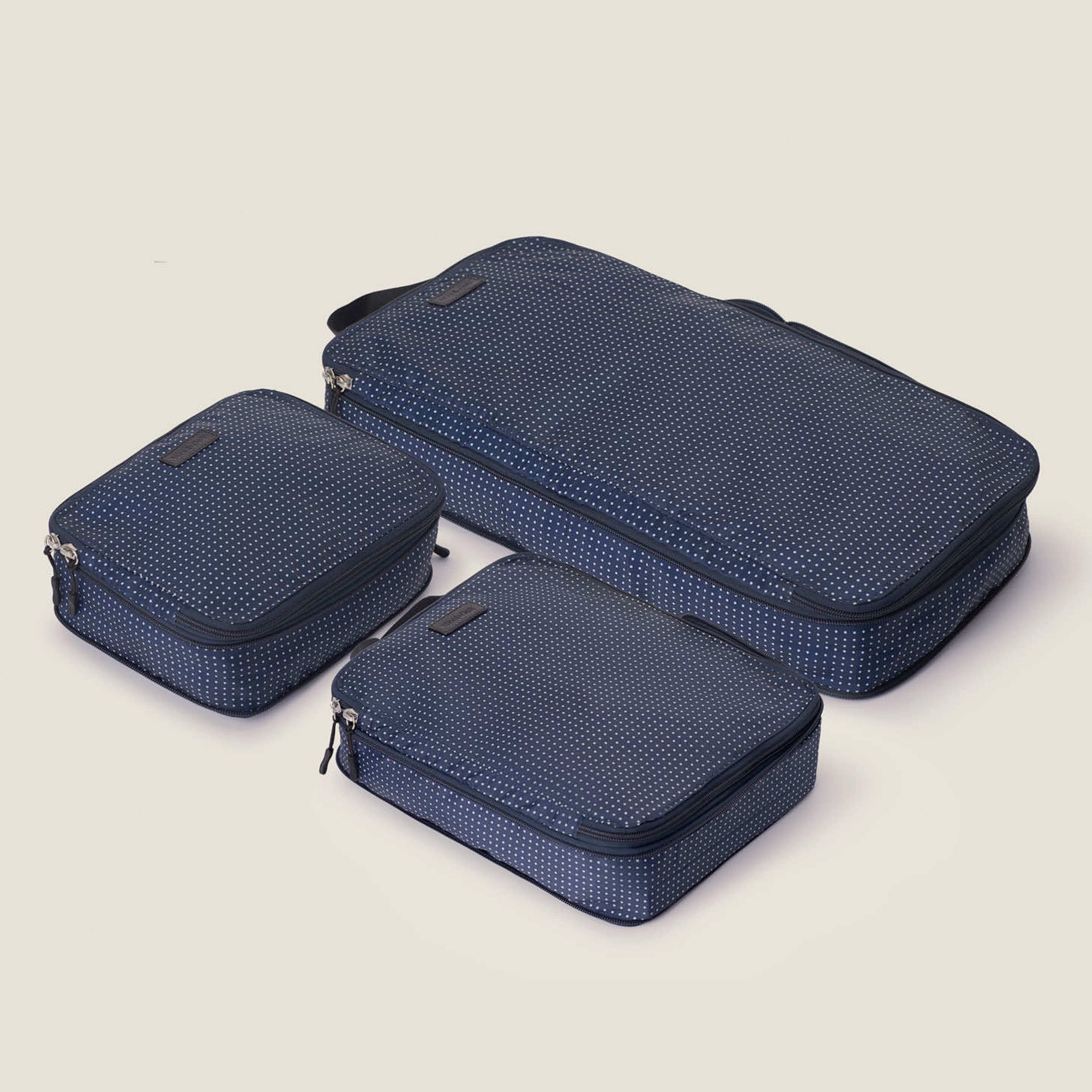
4. Use Packing Cubes to Compress and Organize
Packing cubes aren't just organizational tools — compression cubes can reduce clothing volume by up to 30%. Group items by type or by outfit. When you arrive, you can drop cubes directly into hotel drawers without unpacking individual items.
5. Wear Your Bulkiest Items on the Plane
Your heaviest shoes, your thickest jacket, your largest scarf — wear them. This alone can free up several liters of bag space. It's the oldest trick in the one-bag playbook, and it works every time.
The Role of Packing Cubes
If you haven't tried compression packing cubes, they're a genuine revelation. They work by letting you zip away excess air, compacting soft clothing into dense, organized bricks that stack neatly inside your bag.
Beyond compression, cubes keep your bag organized throughout the trip. Dirty laundry goes in one cube. Clean items stay separated. When you open your bag at security or at your hotel, nothing shifts or spills. It's structured, calm, and efficient — the opposite of the chaotic suitcase we've all experienced.
Choosing the Right Bag for One-Bag Travel
Not all carry-ons are created equal for one-bag travel. Here's what to look for:
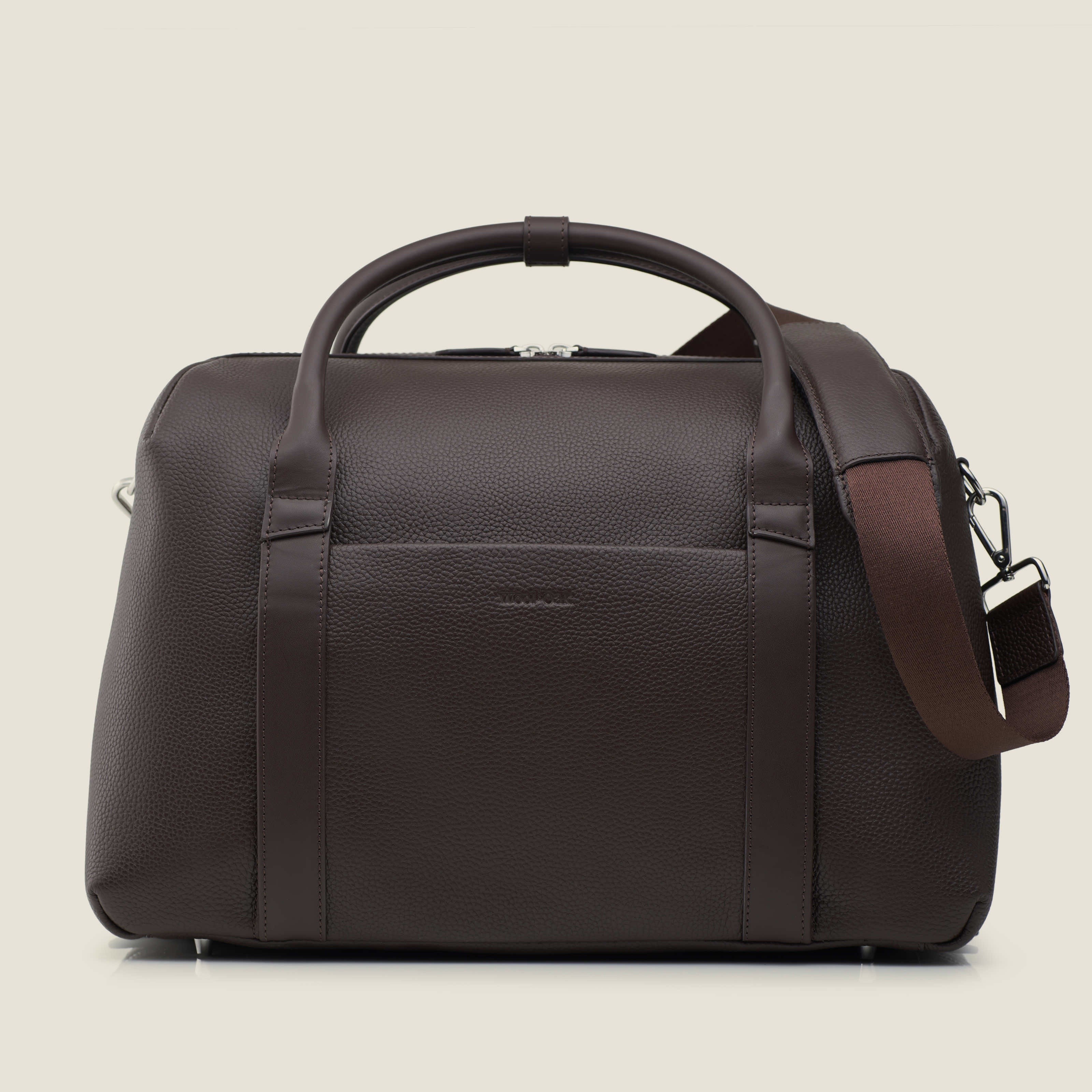
- Maximized carry-on dimensions. You want a bag that uses every inch of the allowed size without going over. Most airlines allow 22 x 14 x 9 inches.
- A garment compartment. This is the difference between arriving wrinkle-free and arriving rumpled. A dedicated space for structured clothing means blazers and dress shirts travel flat, not crushed.
- Multiple access points. A bag that only opens from the top forces you to dig. Front-loading or clamshell designs let you access everything without disturbing your carefully packed layers.
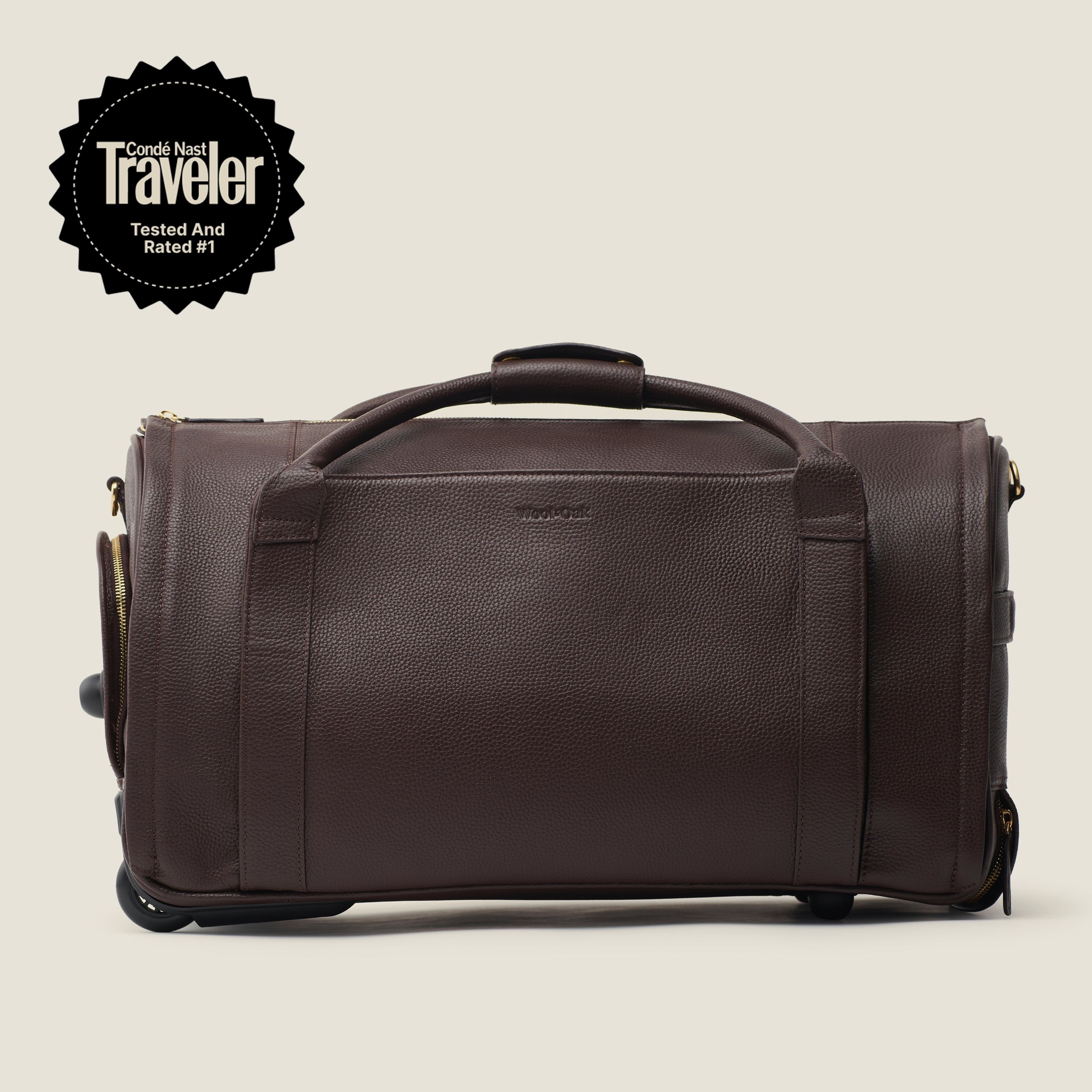
- Wheels for long terminals. Carry-on only doesn't mean carry-on-your-shoulder-only. Smooth-rolling wheels matter when you're navigating a mile-long terminal at O'Hare or Heathrow.
- Durable materials. A bag you'll use every week needs to last for years. Full-grain leather and premium hardware will outlast nylon and plastic zippers many times over.
A Real-World Example
Think a carry-on can't handle serious packing? Consider what Wool & Oak customer Thuy S. managed to fit:
That's over 20 garments — including structured blazers and delicate silks — in a single carry-on. Read that list again. It's not a typo. The right bag, packed with intention, holds far more than you'd expect.
A Note on Regional Jets
We believe in honesty: a maximized carry-on won't fit in the overhead bin of every aircraft. Smaller regional jets — CRJ-200s, some Embraer models — have compact overhead bins that can't accommodate full-size carry-ons from any brand. On those flights, your bag will need to be gate-checked. On mainline aircraft (Boeing 737s, Airbus A320s, and anything larger), a properly sized carry-on fits perfectly in the overhead bin.
If your itinerary includes a regional jet leg, the gate-check is free — and your bag still arrives with you, at your gate, moments after landing. It's a minor tradeoff for the freedom of one-bag travel on every other segment.
Start Small, Then Commit
If you've never traveled carry-on only, start with a short trip — a long weekend. Our 3-day business trip checklist is a good starting point. Get comfortable with the constraints. Learn what you actually wear versus what you pack "just in case." Most people find that after one successful carry-on trip, they never want to check a bag again.
The goal isn't to bring less. It's to bring exactly what you need — and nothing more.
The Nova Large
Full-grain leather carry-on with a garment compartment, wheels & room for a full week.
ShopPacking Cubes
Compression cubes that cut clothing volume by up to 30%. The carry-on traveler's secret weapon.
Shop
Frequently Asked Questions
What's the best carry-on bag for packing a full week?
Look for a carry-on that maximizes the standard 22 x 14 x 9 inch allowance, includes a garment compartment for wrinkle-free packing, and offers multiple access points so you can reach items without unpacking everything. Durable construction — full-grain leather, quality hardware — ensures the bag lasts for years of weekly travel.
How do you fit a week of clothes in a carry-on?
Use the 1-2-3-4-5 rule (1 hat, 2 shoes, 3 bottoms, 4 tops, 5 underwear/socks), plan around a coordinating color palette, use compression packing cubes, roll casual items, fold structured items flat in a garment compartment, and wear your bulkiest clothing on the plane.
Are packing cubes worth it?
Absolutely. Compression packing cubes can reduce clothing volume by up to 30% and keep your bag organized throughout the trip. They make packing, unpacking, and finding specific items dramatically easier — especially in a carry-on where every inch matters.
Can a leather bag be used as a carry-on?
Yes. Full-grain leather carry-ons meet the same airline size requirements as any other material. Leather is actually ideal for frequent travel — it's naturally durable, ages beautifully, and develops character over time rather than showing wear like synthetic fabrics.
