



What to Pack for a 3-Day Business Trip (Capsule Checklist)
The Short Answer
A 3-day business trip requires one carry-on bag with your suits or business wear, one set of casual evening clothes, and a compact toiletry kit. That's it. The trick isn't bringing more — it's choosing pieces that mix and match, packing them properly, and using the right bag. Here's the exact checklist, organized by category, followed by a compartment-by-compartment packing strategy.
The Complete 3-Day Business Trip Packing List
| Category | Items | Quantity | Notes |
|---|---|---|---|
| Business Wear | Suits or blazer/trouser combos | 2 | Choose complementary colors so pieces can mix |
| Dress shirts | 3 | One per day — no re-wearing dress shirts | |
| Ties | 2–3 | Optional depending on your industry | |
| Dress shoes | 1 pair | Wear them on the plane to save bag space | |
| Belt | 1 | Match to shoe color | |
| Casual / Evening | Jeans or chinos | 1 pair | Dark wash works for dinner |
| Casual tops (polo, button-down, knit) | 2 | Layerable pieces extend your options | |
| Casual shoes or clean sneakers | 1 pair | Only if you have room — otherwise dress shoes double-duty | |
| Essentials | Underwear | 4–5 | One extra set in case of delays |
| Socks (dress) | 3 pairs | Match to trousers, not shoes | |
| Socks (casual) | 2 pairs | For evening and travel days | |
| Sleepwear | 1 set | A t-shirt and shorts work fine | |
| Workout clothes | 1 set | Optional — only if you'll use the hotel gym | |
| Toiletries | Toothbrush, toothpaste, deodorant | 1 each | Travel-size everything for TSA compliance |
| Shampoo, conditioner, body wash | Travel bottles | Or use hotel-provided — your call | |
| Razor + shaving cream | 1 | Safety razor blades go in checked bags only | |
| Cologne/perfume | 1 small | Must be under 3.4oz / 100ml | |
| Medications | As needed | Always carry in original packaging | |
| Tech | Laptop + charger | 1 | Separate pocket for security screening |
| Phone charger / cable | 1 | Bring a multi-port charger to reduce bulk | |
| Power adapter (international) | 1 | If traveling abroad | |
| Earbuds / headphones | 1 | Noise-cancelling recommended for flights | |
| Documents | ID / passport | 1 | Accessible pocket — don't bury it |
| Business cards | 10–20 | If your industry still uses them |
How to Fit It All in One Carry-On Bag
The list above looks long, but it compresses down to a single carry-on if you pack strategically. Three principles make the difference:
Separate Suits from Everything Else
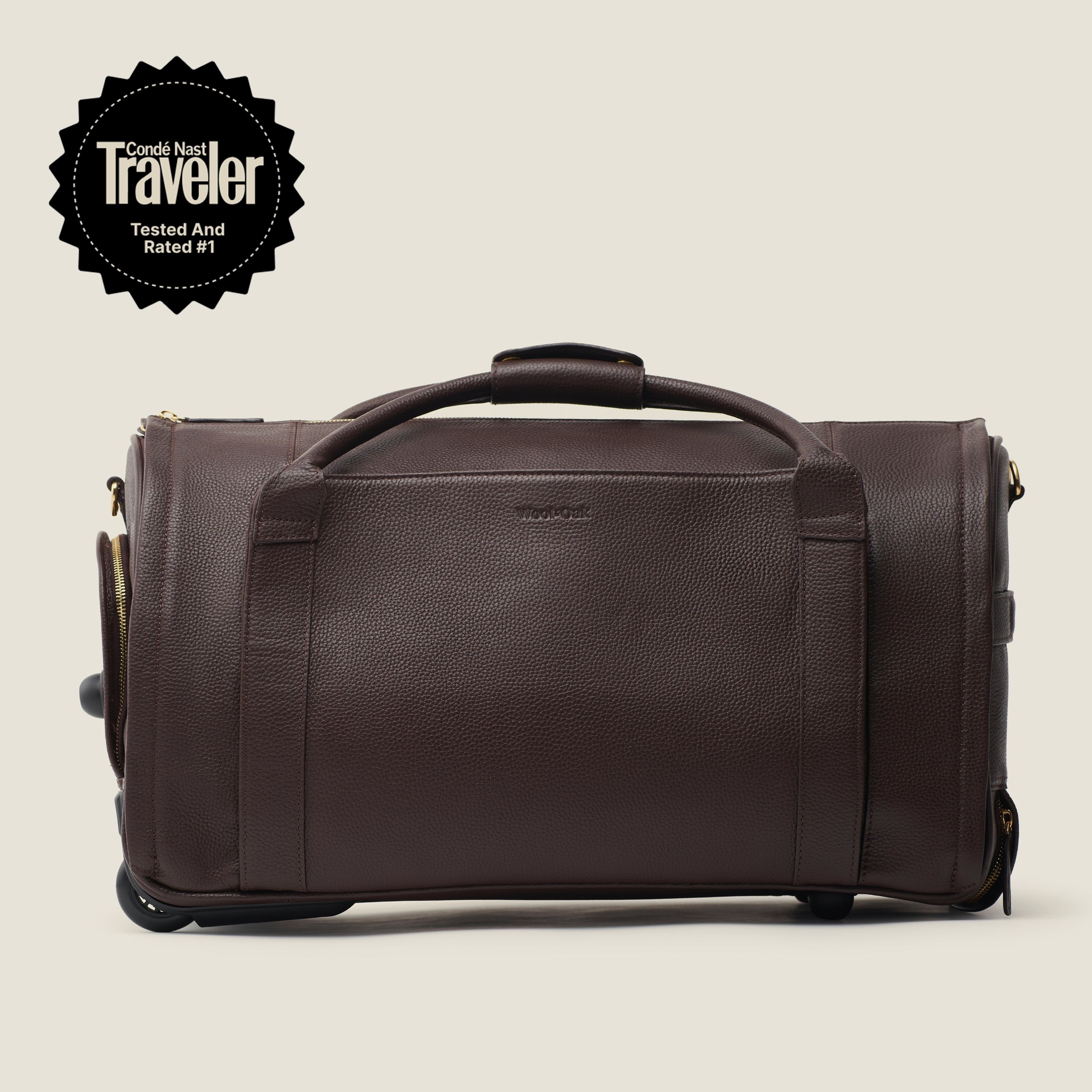
Suits wrinkle when they're packed against other items. A bag with a dedicated garment compartment (like the Wool & Oak Nova Large) keeps blazers and trousers isolated and flat. Without a garment compartment, you'll either need a separate garment sleeve or accept that you're steaming shirts at the hotel. For step-by-step folding technique, see our guide on how to pack a suit in a carry-on.
Roll Casual Clothes, Fold Business Clothes
Rolling is the most space-efficient packing method for casual items — jeans, t-shirts, workout gear, and underwear all compress tighter in rolls. Business shirts and trousers should be folded along their natural creases and laid flat. The garment compartment handles the folding geometry for suits. For dress shirts, fold them around a piece of tissue paper or a dry-cleaning bag to reduce friction and wrinkling.
Use Packing Cubes
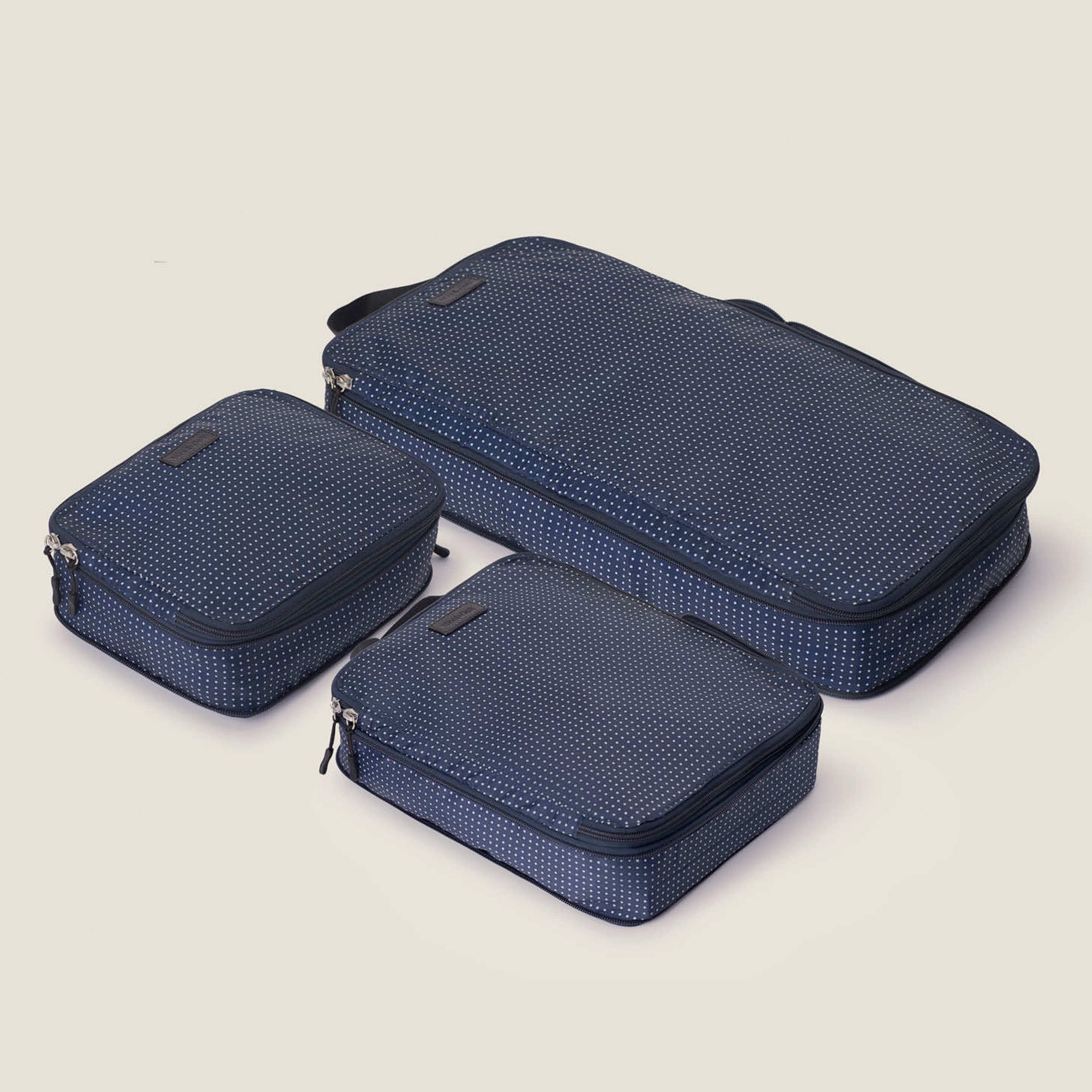
Packing cubes don't just organize — they compress. A set of three cubes (one for casual clothes, one for undergarments/socks, one for workout gear) can reduce your soft goods by roughly 30% in volume. They also prevent the "dig through everything" problem when you need a single item from the middle of the bag.
The Packing Cube Advantage
Packing cubes solve two problems at once: compression and organization. Without them, a bag becomes a single cavern where everything shifts and mingles. With them, each category of clothing has a defined space, and the compression zippers squeeze out dead air.
Wool & Oak's packing cubes are designed to fit the interior dimensions of the Nova Large precisely, which eliminates wasted space between the cube walls and the bag walls. This matters more than it sounds — standard cubes from other brands often leave gaps that let contents shift during transit.
A typical packing cube setup for a 3-day business trip:
- Large cube — Casual clothes (jeans, tops, sleepwear)
- Medium cube — Underwear, socks, workout clothes
- Small cube or pouch — Ties, pocket squares, accessories
Compartment by Compartment: Mapping the Checklist to Your Bag
Here's how the packing list maps to the compartments of a garment duffle like the Nova Large:
Garment Compartment
Both suits or blazer combos, dress shirts laid flat, and ties. This compartment sits along the full length of the bag and keeps tailored clothing separated from everything else. Fold suits along their natural crease lines and layer them — heaviest garment on the bottom.
Main Duffle Section
Packing cubes with casual clothes, underwear, socks, sleepwear, and workout gear. This is where the packing cube strategy pays off. Everything compressed and organized, nothing touching your business clothes.
Shoe Pocket
Casual shoes or clean sneakers (if bringing them). Some travelers use this for a dopp kit instead if they're not packing a second pair of shoes. Keep shoes in a dust bag to prevent scuffing the bag interior.
Exterior / Tech Pocket
Laptop, charger, earbuds, phone cable, and travel documents. Anything you need to access quickly at security or on the plane lives here. A separate tech pocket means you're not unzipping the main bag in the overhead bin.
Toiletry Pouch
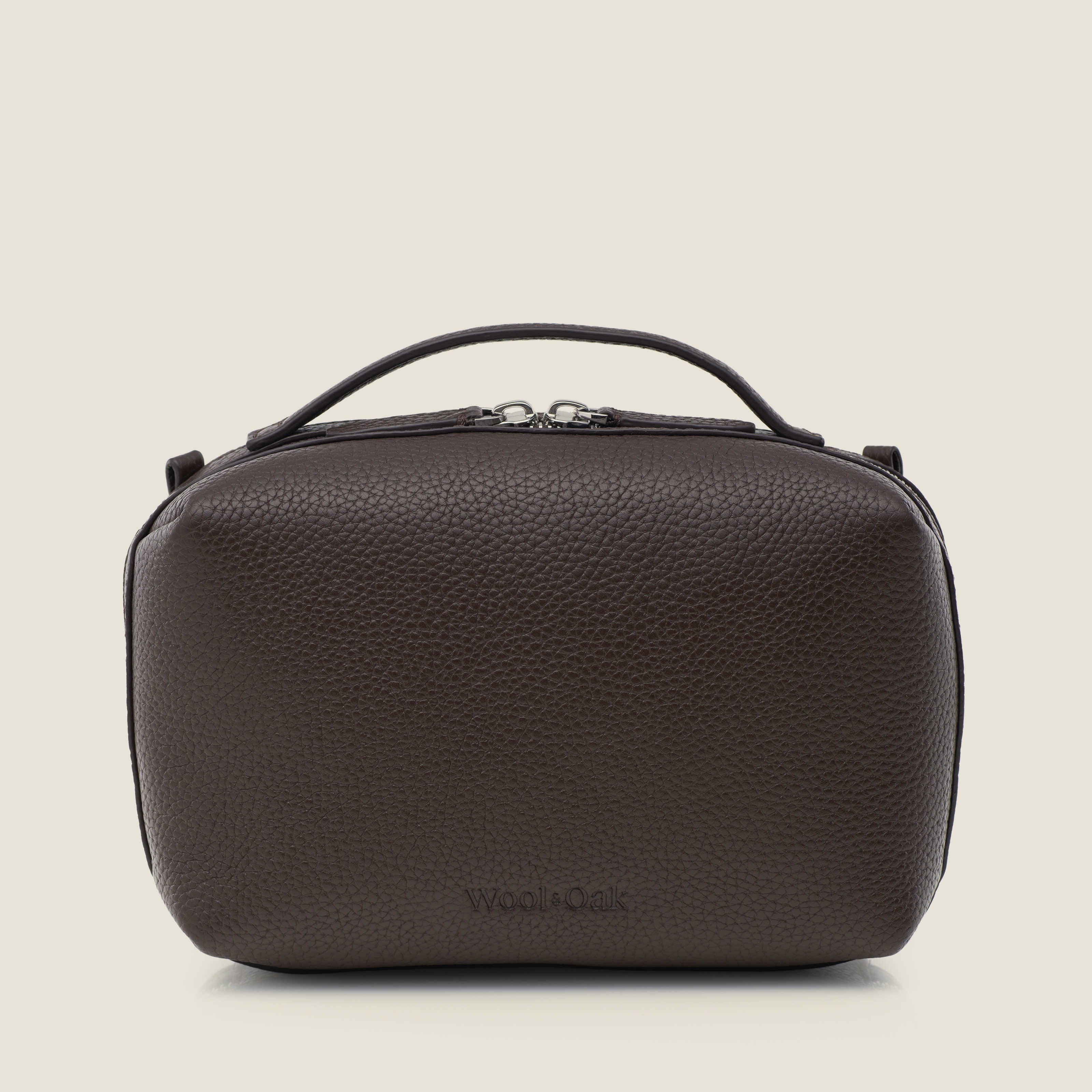
All toiletries in a TSA-compliant clear bag or dopp kit. Keep this near the top of the main section or in a dedicated pocket so it's easy to pull out at security.
What Customers Pack
Thuy's packing list is a masterclass in maximizing a garment duffle. The secret is fabric choice — silk, linen, and cashmere all compress well and resist wrinkles better than stiff cotton. If you're packing for business, merino wool suits and wrinkle-resistant dress shirts follow the same principle. Heading out for longer? Our guide to packing a full week in one carry-on scales this same approach to seven days.
Nova Large
Full-grain leather garment duffle with wheels — fits suits flat in a dedicated compartment and rolls through the airport.
Shop the ProductPacking Cubes
Sized to fit the Nova Large interior precisely — compress clothing by up to 30% and keep categories separated.
Shop the ProductFrequently Asked Questions
Can you fit a week of clothes in a carry-on?
Yes, if you plan your wardrobe strategically. The key is choosing pieces that work in multiple combinations (a navy blazer pairs with grey trousers and khaki chinos), using packing cubes for compression, and wearing your bulkiest items (jacket, boots) on the plane. For a full week, you'll want 4–5 shirts, 2–3 bottoms, and 2 jackets/blazers. One customer reported fitting over 20 garments in a single Nova Large. It's about fabric weight and packing technique more than bag size.
How do packing cubes help?
Packing cubes compress clothing by squeezing out dead air, typically reducing volume by 25–30%. They also keep categories separated so you're not digging through the entire bag to find socks. Most importantly, they prevent shifting — your carefully packed bag at home stays organized through transit. Cubes sized to fit your specific bag (rather than generic sizes) eliminate wasted space between cube walls and bag walls.
Should you roll or fold business shirts?
Fold business shirts. Rolling works for casual clothes (t-shirts, jeans, underwear) but dress shirts develop diagonal creases when rolled that are harder to steam out than the flat fold lines from traditional folding. The best method: button the shirt, lay it face-down, fold the sleeves back, then fold in thirds. Place a sheet of tissue paper or dry-cleaning plastic between stacked shirts to reduce friction and wrinkling.
What size bag do you need for a 3-day business trip?
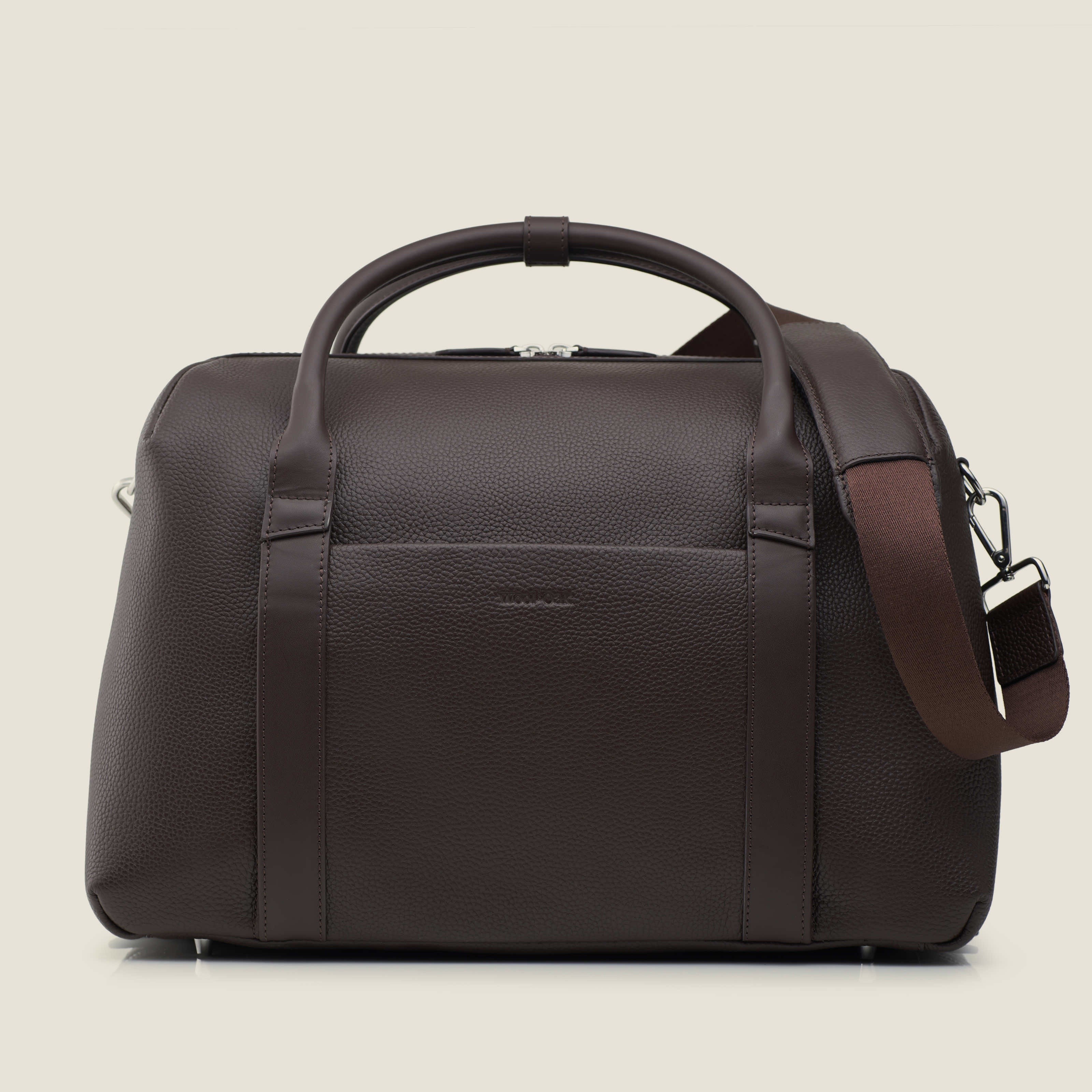
A standard carry-on (22" x 14" x 9") is sufficient for most 3-day business trips. If you're traveling with suits, you want a bag with a garment compartment to use that space efficiently. If you can pack light — one suit, a few shirts, minimal casual clothes — a personal-item-sized duffle (like the Wool & Oak Duffle Suitcase at roughly 18" x 13" x 8") can work, especially if you don't mind wearing your suit on the plane.
%0A%0A%0AThe%20Short%20Answer%0AA%203-day%20business%20trip%20requires%20one%20carry-on%20bag%20with%20your%20suits%20or%20business%20wear,%20one%20set%20of%20casual%20evening%20clothes,%20...)