



The Short Answer
Leather luggage needs three things to last a lifetime: regular conditioning every two to three months, proper storage between trips (stuffed, in a dust bag, away from direct sunlight), and prompt attention to water exposure or scratches. That's it. No mystery, no expensive spa treatments. Just consistent, simple care that takes ten minutes and pays you back with decades of use and a patina that makes your bag unmistakably yours.
Last updated: April 2026
Below is the complete guide to keeping your leather bags in peak condition, from break-in through year ten and beyond.
Monthly Leather Care Routine
A quick monthly routine prevents most leather issues before they start. Here is the step-by-step process:
Dust and wipe down
Use a soft, lint-free cloth (microfiber works perfectly) to remove surface dust and debris. Pay attention to seams, zipper tracks, and the base of the bag where grit collects.
Apply leather conditioner
Using a clean cloth or your fingertips, apply a thin layer of conditioner in small circular motions. Work section by section so you get even coverage. Less is more here — a little goes a long way.
Buff gently
With a fresh dry cloth, buff the surface using light, circular strokes. This removes excess conditioner and brings out a subtle sheen.
Let it rest
Allow the bag to air dry for at least 30 minutes before using or storing it. Don't rush this step — let the leather absorb everything fully.
If you travel frequently (more than once a month), condition every six to eight weeks. If the bag sits between trips, every three months is plenty.
How to Handle Rain and Water
Leather and water aren't enemies — they just need boundaries. Full-grain leather can handle light rain and the occasional splash without drama. Here's how to respond when your bag gets wet:
- Blot immediately — Use a clean, absorbent cloth to blot (never rub) the wet area. Rubbing pushes moisture deeper into the grain.
- Air dry naturally — Set the bag in a well-ventilated area at room temperature. Never use a hairdryer, radiator, or direct heat — heat dries leather unevenly and can cause cracking.
- Condition after drying — Once fully dry (give it 24 hours if it was thoroughly soaked), apply conditioner to restore the oils that water displaced.
Water spots on leather often disappear on their own as the moisture evaporates evenly. If a spot persists, lightly dampen the entire panel with a cloth so it dries uniformly.
Dealing with Scratches on Leather
Scratches on leather luggage are not damage. They are the beginning of character. Here is how to think about them:
- Minor surface scratches often buff out with nothing more than the natural oils from your fingertip. Rub the scratch gently with your thumb in a circular motion — the warmth and oil help the leather fibers resettle.
- Moderate scratches respond well to a small dab of leather conditioner applied directly and buffed in.
- Deeper scratches become part of the patina. They tell the story of where you've been. This is one of the fundamental differences between leather and synthetic materials — leather wears in, synthetics wear out.
The Break-In Period
Let's be honest: new leather luggage is stiff. The zippers will feel tight. The flaps won't fold as easily as you'd like. This is completely normal and actually a sign of quality.
Full-grain leather needs time to conform to how you use it. Expect a break-in period of two to four weeks of regular use. During this time:
- Zippers loosen and glide more smoothly with each open and close
- Leather softens and develops subtle creases that are unique to your usage
- Handles mold to your grip
- The overall structure relaxes while maintaining its shape
Think of it like a great pair of leather boots. The first week is an investment. Every week after that is the payoff.
How to Store Leather Bags
How you store leather luggage between trips matters just as much as how you care for it during use. Follow these guidelines:
- Stuff it — Fill the bag with acid-free tissue paper or clean cotton T-shirts to help it hold its shape. Avoid newspaper — the ink can transfer.
- Use a dust bag — A breathable cotton dust bag protects against dust and light exposure. Most quality leather bags ship with one.
- Choose a cool, dry spot — A closet shelf works perfectly. Avoid attics, basements, or anywhere with extreme temperature swings or humidity.
- Never store in plastic — Plastic traps moisture and can cause mildew. Leather needs to breathe, even in storage.
- Keep away from direct sunlight — Prolonged UV exposure fades leather and dries it out over time.
Products We Recommend for Leather Care
You don't need a cabinet full of products. Here is what works:
- Leather conditioner: Look for lanolin-based or beeswax-based formulas. These mimic the natural oils in leather and absorb well. Avoid anything silicone-based, which creates a surface coating that blocks the leather from breathing.
- Soft cloths: Microfiber or 100% cotton flannel. Keep a few dedicated to leather care so you're not introducing residue from other cleaning products.
- Leather cleaner (occasional use): A gentle, pH-balanced leather cleaner for deeper cleaning once or twice a year. Not needed monthly.
What to avoid: saddle soap (too harsh for bag leather), olive oil or coconut oil (can go rancid and darken leather unpredictably), baby wipes (contain chemicals that strip natural oils), and any all-purpose household cleaners.
The Patina Payoff
Here is the reason leather care is worth every minute you invest: patina. Full-grain leather is the only luggage material that genuinely improves with age — and not all leather grades develop patina equally. The surface develops a warm, rich depth of color that is impossible to replicate artificially. Every trip, every handle grab, every rain shower adds a layer to the story.
Nylon fades and pills. Polycarbonate scratches and yellows. Bonded leather peels. But full-grain leather? It deepens. It glows. After five years of care, your bag won't look old. It will look seasoned.
That is the fundamental promise of leather luggage, and the reason the care routine is worth it. You aren't maintaining something that's depreciating. You're investing in something that's appreciating — visually, structurally, and personally. For the full cost-per-use breakdown, see what makes a bag worth $500.
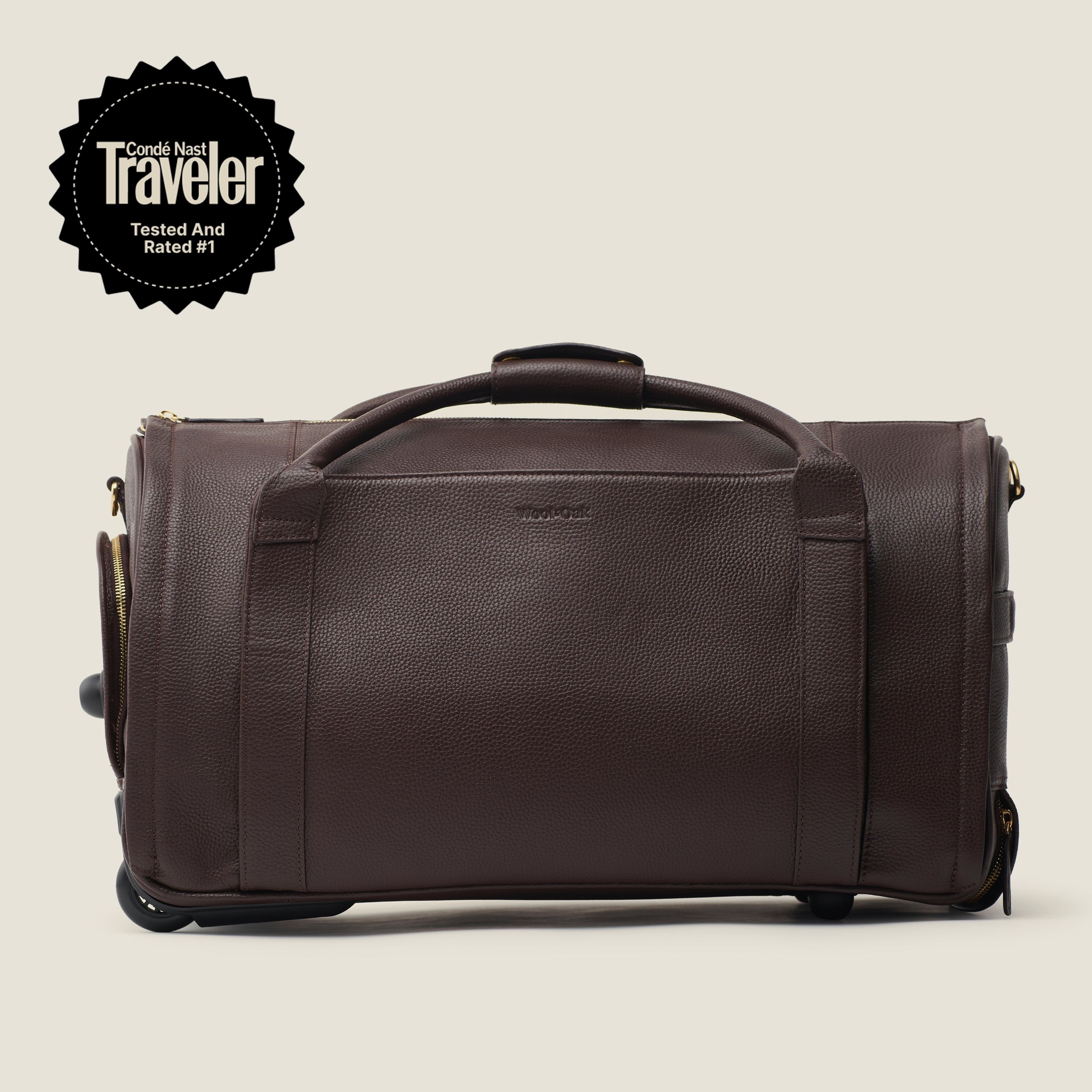
Nova Large
Full-grain leather garment duffle built to develop beautiful patina over decades of travel.
Shop the ProductFrequently Asked Questions
Can leather bags get wet?
Yes. Full-grain leather can handle light rain and splashes without issue. The key is to blot water promptly, let the bag air dry at room temperature (never with direct heat), and apply conditioner once it's fully dry. Avoid submerging leather or leaving it soaked for extended periods.
How often should I condition leather?
Every two to three months for bags in regular rotation. If you travel frequently (weekly), condition every six to eight weeks. If the bag is in storage, condition it before storing and again before its next use. The leather will tell you when it's thirsty — it will look dry and feel less supple.
Does leather luggage scratch easily?
Full-grain leather will pick up surface marks from normal use, but most minor scratches buff out with your fingertip or a small amount of conditioner. Unlike synthetic materials, scratches on leather become part of the patina rather than permanent damage. Over time, these marks add character and depth to the leather's appearance.
How long does leather luggage last?
With proper care, full-grain leather luggage can last 20 years or more. Many leather bags outlast their owners. The key factors are material quality (full-grain vs bonded or corrected grain), hardware quality, construction method, and consistent maintenance. A well-made leather bag is genuinely a buy-it-for-life purchase.
Can I use olive oil on leather?
No. Olive oil and other cooking oils can go rancid over time, creating unpleasant odors and potentially damaging the leather. They can also darken leather unevenly. Use a dedicated leather conditioner with a lanolin or beeswax base instead. These are formulated to nourish leather without the risks associated with food-grade oils.
