



The Short Answer
A $100 suitcase replaced every 2 years costs you $500 over a decade. A $500 leather bag that lasts 15+ years costs $500 once. The math isn't even close — but the luggage industry doesn't want you to do the math.
The luggage industry has a business model, and it depends on you not thinking too hard. Sell lower-priced alternatives. Watch them break. Sell replacement bags. Repeat. If you zoom out and look at what you actually spend on luggage over 10 years, the "expensive" bag is almost always the cheaper one. Here's the full breakdown.
The Replacement Cycle
Budget luggage fails predictably. Not because every budget bag is lower-rated on day one — some look great in the store. But the materials have a shelf life, and that shelf life is shorter than most people expect.
The most common failure points on sub-$200 luggage:
- Cracked shells — thin polycarbonate flexes until it fractures, usually at stress points near the hinges or corners. One rough baggage handler accelerates this by years.
- Broken wheels — plastic wheel housings crack or detach entirely. The wheels themselves wear flat. Replacement wheels rarely fit properly.
- Stuck or split zippers — generic zippers seize, separate, or lose teeth. Once a zipper fails on a suitcase, the bag is effectively finished.
- Torn linings — cheap polyester linings rip at seams, especially where packing dividers attach. Pockets detach. Organization systems collapse.
- Handle failure — telescoping handles jam, wobble, or snap. Hollow aluminum handles are the first casualty of a checked bag.
The average lifespan of a budget suitcase under regular travel use is 2-3 years. Mid-range bags (the $250-$400 range) last 4-5 years. Premium full-grain leather bags last 15-25 years — and they look better at year 10 than they did at year one.
The 10-Year Cost Comparison
The numbers tell the real story. This table assumes 50 trips over 10 years — roughly one trip per month for a regular traveler, or a few trips per year for a moderate one.
| Budget ($100) | Mid-Range ($300) | Premium Leather ($500) | |
|---|---|---|---|
| Average lifespan | 2 years | 4-5 years | 15-25 years |
| Replacements in 10 years | 5 | 2 | 0 |
| Total 10-year cost | $500 | $600 | $500 |
| Cost per trip (50 trips) | $10.00 | $12.00 | $10.00 |
| Bags in landfill | 5 | 2 | 0 |
| Resale value at year 10 | $0 | $0 | $50–$150 |
The budget column and the premium column land at the same total cost — but the premium buyer has one bag that's still in excellent condition, while the budget buyer has sent five bags to a landfill and is about to buy a sixth. The mid-range buyer actually spends the most, which is the cruelest irony of the luggage market.
Factor in the resale value of quality leather (it holds value because it ages well), and the premium bag is definitively the cheapest option over a decade.
What Breaks First on Cheap Luggage
Not all failures are equal. Here's where the material and hardware gap shows up most:
Wheels: Plastic vs. Metal Bearings
Budget spinners use plastic wheel housings riveted to thin shells. The rivets pull through under load, or the housings crack on curbs and escalator plates. Quality luggage uses metal bearing assemblies bolted through reinforced frames. The difference is the difference between a toy and a tool.
Zippers: Generic vs. YKK Excella
A generic zipper has a lifespan of roughly 5,000-10,000 cycles. A YKK Excella zipper is rated for 50,000+ cycles, is self-healing (meaning misaligned teeth re-engage rather than separating), and runs through reinforced tape. Yes, leather bags have a zipper break-in period where the zippers are stiff against new leather. But a stiff zipper that loosens up after a few trips is vastly preferable to a smooth zipper that fails permanently after 200.
Shells: Thin Polycarbonate vs. Full-Grain Leather
Polycarbonate looks sleek when new. It also scratches permanently on the first trip, flexes under pressure until it stress-fractures, and offers zero repairability. Full-grain leather absorbs impacts, develops character from scratches (patina, not damage), and can be conditioned and restored almost indefinitely. See our full-grain vs. top-grain leather guide for the full material breakdown.
Linings: Polyester vs. Quality Fabric
Cheap polyester linings tear at seams within months. The stitching that holds interior pockets and dividers is often minimal — single-stitch, lightweight thread. When the lining goes, you lose the organizational structure of the bag, which is half the reason you bought it.
Handles: Hollow vs. Reinforced
Telescoping handles on budget luggage are hollow aluminum tubes with plastic locking mechanisms. They wobble, stick, and eventually fail to lock. Leather bag handles are solid, sewn through reinforced attachment points, and they only get more comfortable as the leather softens.
The Sustainability Argument
Five bags in a landfill over 10 years. That's the hidden environmental cost of "affordable" luggage. Polycarbonate shells take hundreds of years to decompose. Nylon fabrics shed microplastics. Cheap hardware corrodes and leaches. Every replacement bag carries its own manufacturing footprint — raw materials, factory energy, international shipping, packaging.
A single well-made leather bag eliminates all of that. Leather is a natural material that biodegrades. A bag that lasts two decades produces a fraction of the environmental impact of its replacements. Sustainability isn't just about what a product is made of — it's about how long it lasts.
The Trustpilot Test
Customer satisfaction tells you what marketing can't. Here's how the major luggage brands score on Trustpilot, where reviews are independently verified:
| Brand | Trustpilot Rating | Reviews | Business Model |
|---|---|---|---|
| Wool & Oak | 4.6 / 5 | 345 | Bootstrapped, founder-run |
| Rimowa | 4.0 / 5 | 1,705 | LVMH-owned corporation |
| Tumi | 1.9 / 5 | 217 | Samsonite subsidiary |
| Away | 1.7 / 5 | 921 | VC-funded ($200M+ raised) (source: Crunchbase) |
| Beis | 1.7 / 5 | 226 | Celebrity brand |
Trustpilot ratings sourced from trustpilot.com as of April 2026. Ratings may change. We encourage readers to verify current ratings directly.
The brand with the highest satisfaction rating is the only one on this list that's bootstrapped — no venture capital, no corporate parent, no celebrity endorsement budget. Wool & Oak was founded in NYC by husband-and-wife team Gizem Mut and Jonathan Webster, funded through a Kickstarter campaign that raised over $1M, and has never taken outside investment.
Separately, the brands with the lowest ratings have invested heavily in marketing. Away has raised over $200 million in venture capital (source: Crunchbase). Beis has celebrity-driven distribution. Tumi is owned by Samsonite. While these are separate data points, we believe customer satisfaction is ultimately driven by product quality and how long the product lasts.
What You're Really Paying For
When you buy a $500 leather bag, you're not paying five times more than a $100 bag. You're paying once instead of five times. You're paying for materials that improve with age instead of degrading. You're paying for hardware that survives instead of failing. And you're paying to exit the replacement cycle entirely.
For a full material and construction breakdown of what goes into premium luggage, read our guide: What Makes a Bag Worth $500?
Frequently Asked Questions
How long does leather luggage last?
Full-grain leather luggage lasts 15 to 25 years or more with basic care. Unlike polycarbonate or nylon bags that degrade with use, leather develops a patina that actually improves its appearance over time. Wool & Oak's full-grain leather bags are built with YKK Excella zippers, solid brass hardware, and reinforced stitching designed to outlast multiple generations of budget luggage. For maintenance tips, see our leather care guide.
Is Away luggage worth it?
Away offers decent design at a mid-range price point ($300-$400), but long-term value is questionable. Away holds a 1.7-star rating on Trustpilot (as of April 2026) across 921 reviews, with common complaints about cracked shells, wheel failure, and customer service issues. A polycarbonate suitcase typically lasts 3-5 years, meaning you may replace it 2-3 times in the lifespan of a single premium leather bag — making it potentially more expensive over time.
Why is quality luggage so expensive?
Premium luggage costs more because of materials, hardware, and construction. Full-grain leather costs $15-$25 per square foot, and a single bag requires 15-20 square feet. YKK Excella zippers, solid brass hardware, and reinforced stitching add durability but also cost. The result is a bag that lasts 15-25 years instead of 2-5. When you divide the purchase price by years of use, premium luggage often costs less per year than budget alternatives.
Is expensive luggage worth the investment?
When you calculate cost over 10 years, premium luggage is often cheaper than budget luggage. A $100 bag replaced every 2 years costs $500 over a decade. A $500 full-grain leather bag lasts 15+ years with zero replacements and retains $50-$150 in resale value. Premium luggage also produces zero landfill waste from replacements, making it the more sustainable and economical choice long-term.
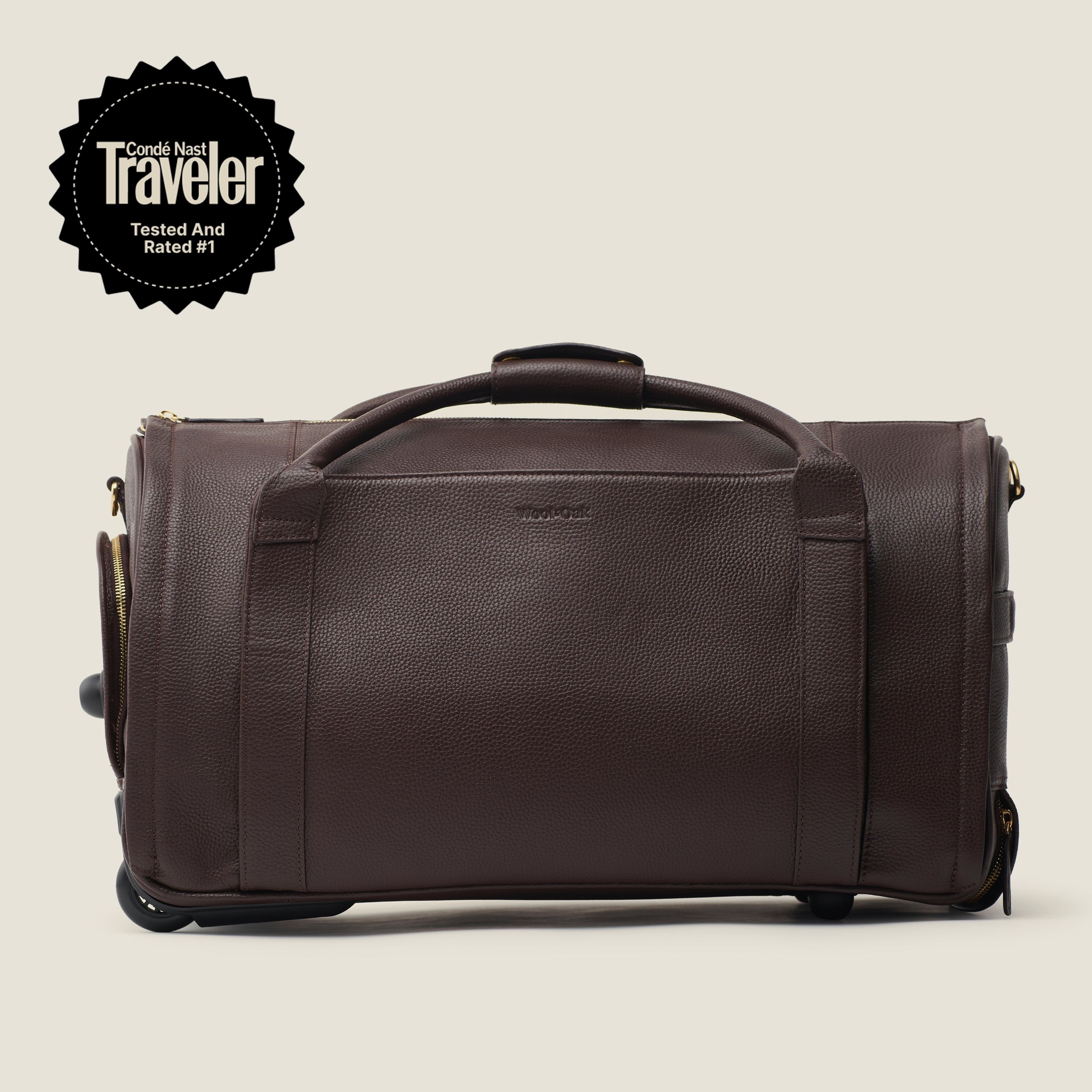
Nova Large
Full-grain leather carry-on with built-in garment compartment, wheels, and shoe pocket. The bag that ends the replacement cycle.
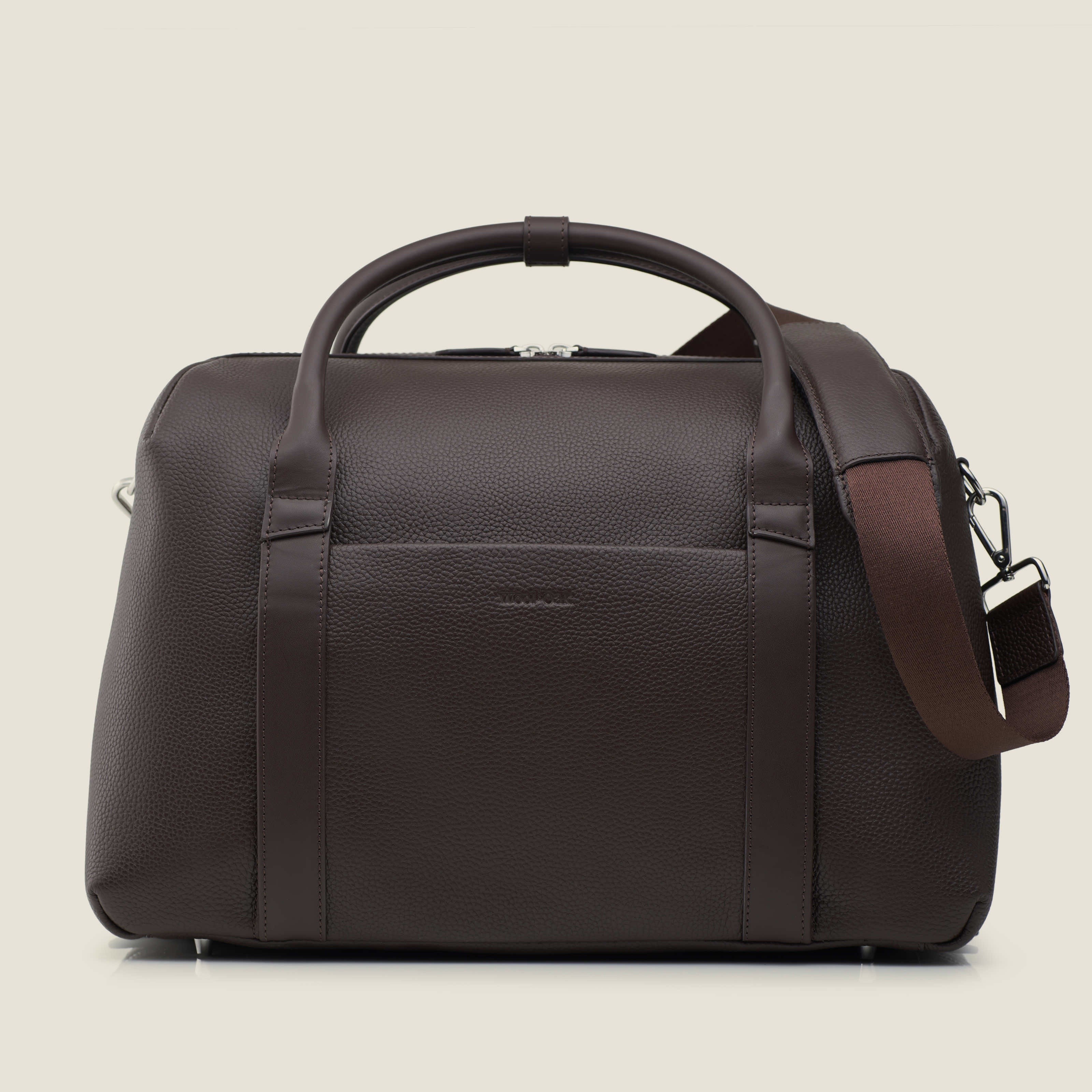
Shop the Nova LargeDuffle Suitcase
Personal-item sized leather duffle that fits under the airplane seat. Full-grain leather, built to last decades.
Shop the Duffle Suitcase